
Rotary cutting is one of the most important skills every beginner quilter needs to learn. A rotary cutter is fast, accurate, and essential for quilting, but also dangerous. A rotary cutter is as sharp as a kitchen knife and should be treated with the same respect.
In this article, I will share practical rotary cutter tips including which rotary cutter to choose, how to hold your cutter correctly and more.
Rotary Cutter Tips for Beginner Quilters
How to Choose the Right Rotary Cutter
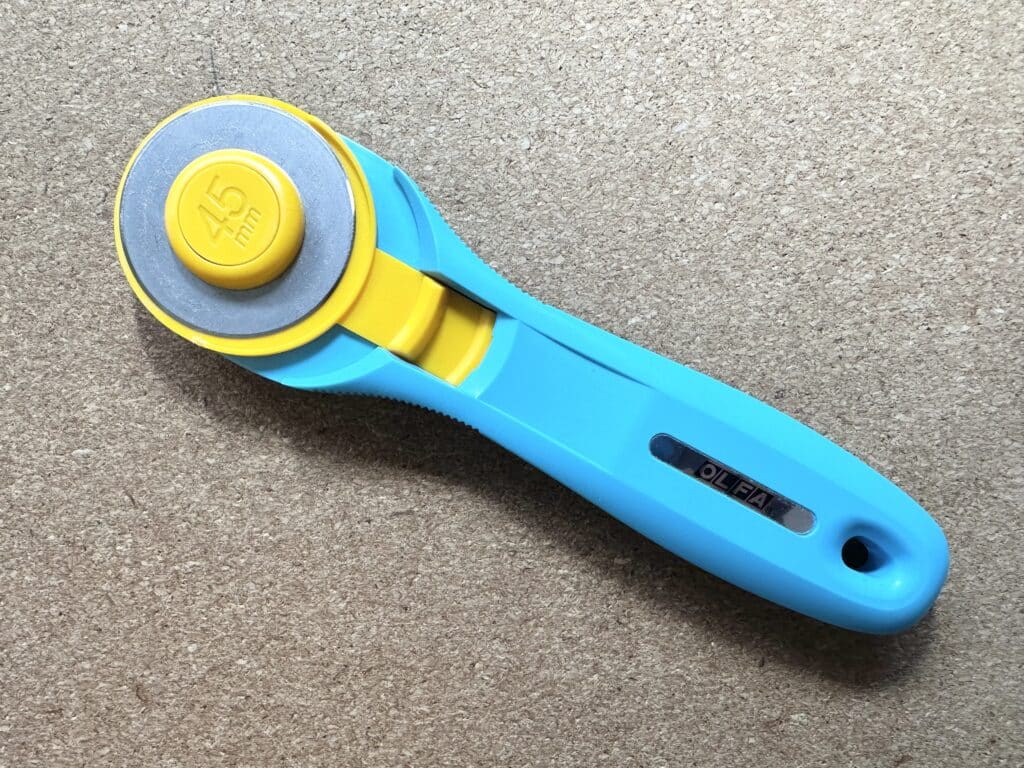
Rotary cutters made for the craft industry are available in a number of sizes: 18mm, 28mm, 45mm and 60mm. The predominant sizes you will see in quilting are 45mm and 60mm. Either size will work fine, but most quilters start with a 45mm rotary cutter.
If you are cutting large amounts of fabric and/or cutting for long periods of time, then a 60mm cutter would be a better choice for you. The blade on a 60mm cutter is larger and it glides better, thus making cutting easier. I alternate between both sizes depending on my needs at the moment.
I always recommend Olfa rotary cutters for new quilters. They are inexpensive, high quality and last a long time. I am still using my first Olfa rotary cutter purchased 23 years ago.
Always Pay Attention to What you Are Doing
I can’t say this enough, but please pay attention to what you are doing when you are cutting with a rotary cutter. It is very easy to roll off the side of the ruler and onto your hand. Years ago, I rolled the cutter off the side of the ruler and over the top of my thumb. While I didn’t do any major damage, it bled a lot and really hurt. Be safe and pay attention to what you are doing at all times.
Cover the Blade When you Put your Cutter Down
This may sound silly, but please cover your blade when you put it down. By taking this simple step, you can avoid an open blade falling off of your table or hitting your hand as you adjust fabric on your table. I have had an open rotary cutter fall off my table, and it came very close to impaling the top of my foot. Take a second to cover your blade to avoid injury.
How to Hold your Rotary Cutter Correctly
If you have ever watched shows like Project Runway or The Great British Sewing Bee, you have been privy to contestants holding a rotary cutter in a variety of styles. My favourite is grasping it in your fist and using the cutter upright. Please do not do this. You have far less control this way. Your entire hand should wrap around the rotary cutter and it should be parallel to your cutting mat.
Replace Dull Blades
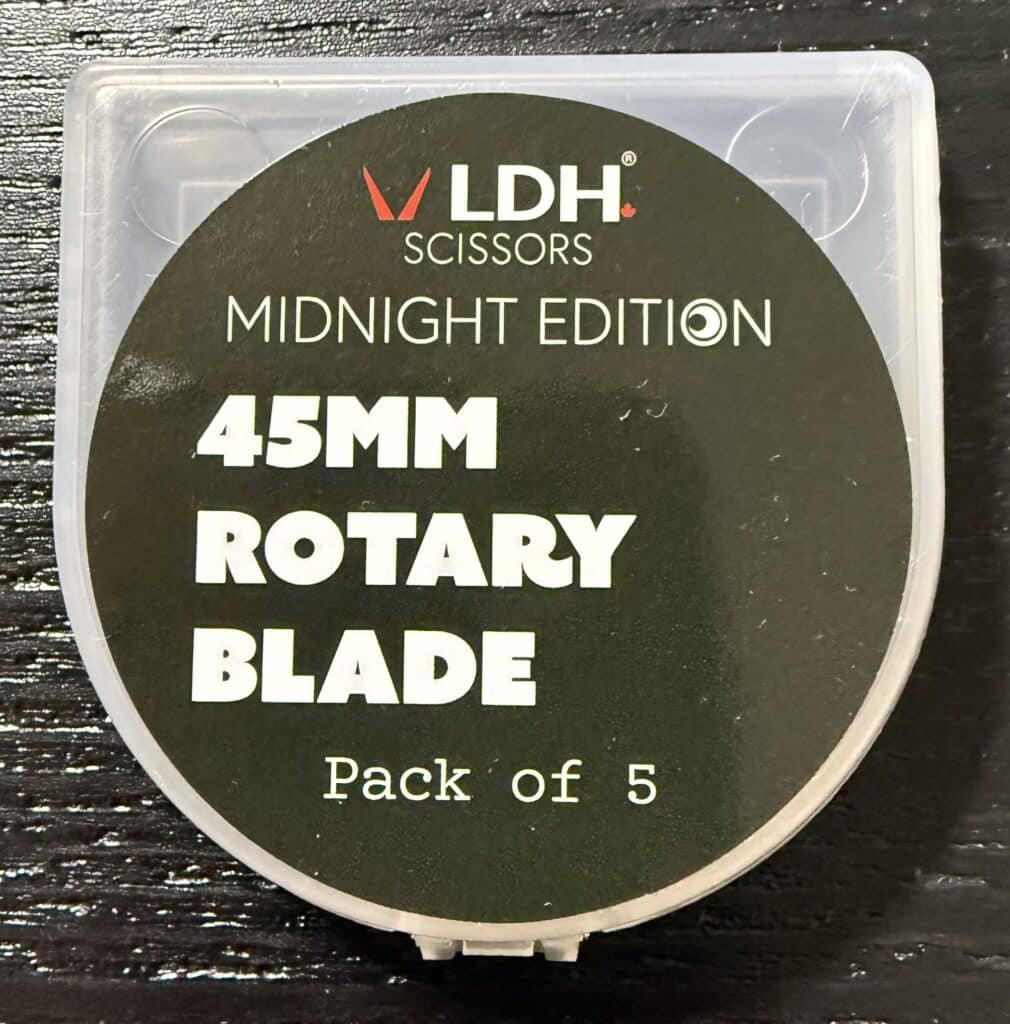
Replacing rotary cutter blades is a necessity in quilting. As soon as you have trouble cutting with one pass, you will need to replace your blade soon. I used to use Olfa blades, but last year I started using LDH Scissors 45mm Midnight Edition Rotary Blades instead. Made by a Canadian company, these blades are made of carbon steel which is very hard. I am not lying when I tell you that I put one in my Olfa 45mm cutter in August 2025 and it is still going strong, and I have cut multiple quilts with this blade. They are well worth the investment.
Always dispose of your blades safely. Please do not drop them in a plastic garbage bag. Some recycling centers will take your blades, so make sure you check out your local facility for more information.
My Final Thoughts
Rotary cutters are a necessary tool in quilting. While you can cut your fabric with scissors, your cuts will not be as accurate, and it will take far longer since you have to take the time to mark your fabric before cutting.
Rotary cutters are safe as long as you follow some common sense practices. Use a rotary cutter for the most accurate fabric cuts.
For more helpful quilting tips and tricks, make sure you follow me on YouTube and BlueSky.